Anime Car Wraps: Itasha Style, Printing and Practical Tips
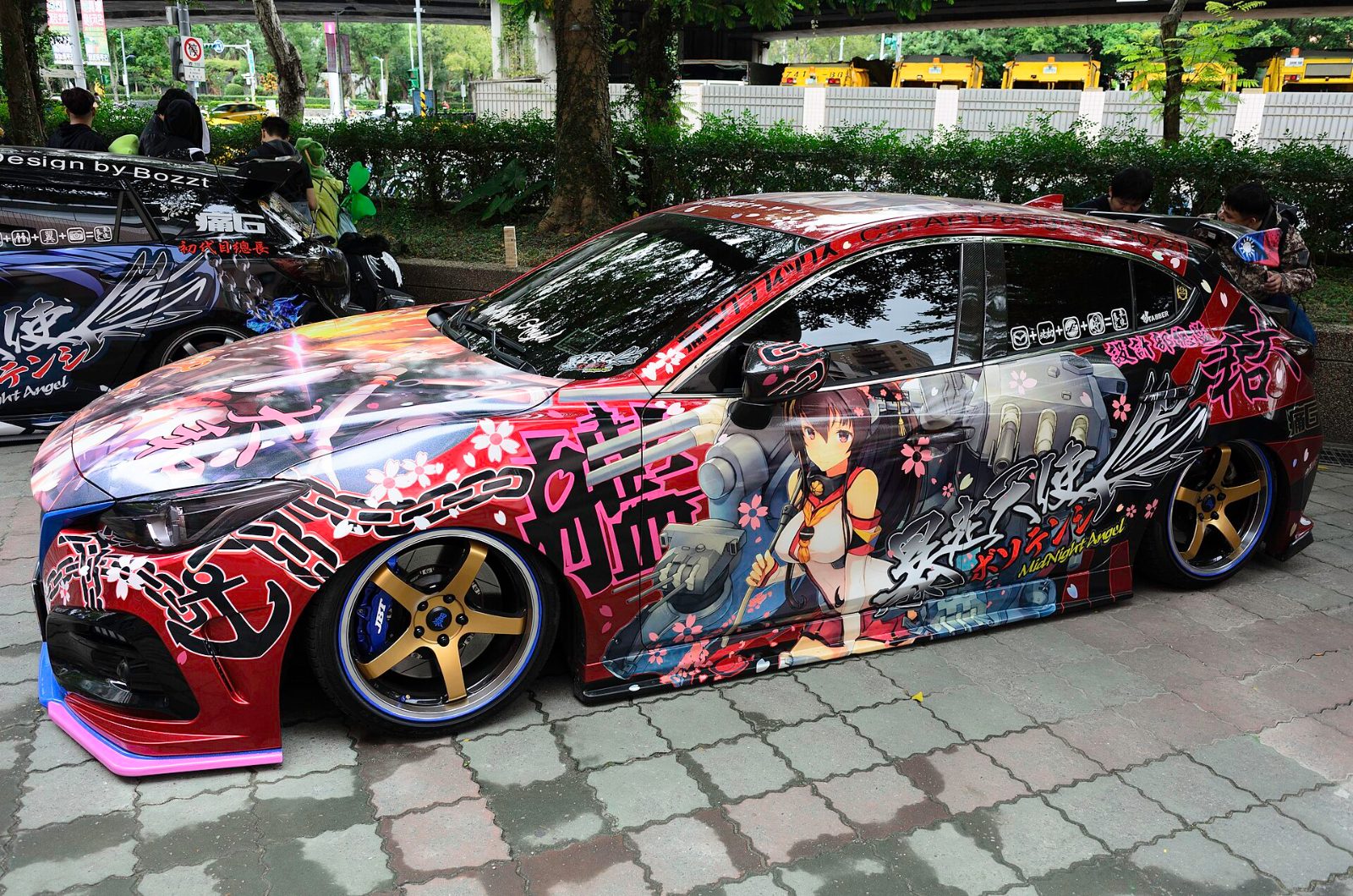
Anime car wraps, known in Japan as itasha, are printed vinyl graphics showing anime or manga characters, from a small door decal to a full-body design. They are made by printing artwork onto wrap film, laminating it and fitting it like any other wrap. In the UAE the key points are print quality and UV-resistant laminate, the rights to the artwork, and keeping the design within local rules on vehicle appearance.
What itasha means
The word itasha comes from Japanese and is often translated loosely as “painful car”, a self-mocking joke about how bold the look is. The style grew in Japanese fan culture, where owners decorated their cars with favourite characters and brought them to car meets and conventions. Today you see anime-themed cars at events around the world, and the UAE has an active anime and gaming fan community, with events such as conventions in Dubai and Abu Dhabi drawing large crowds.
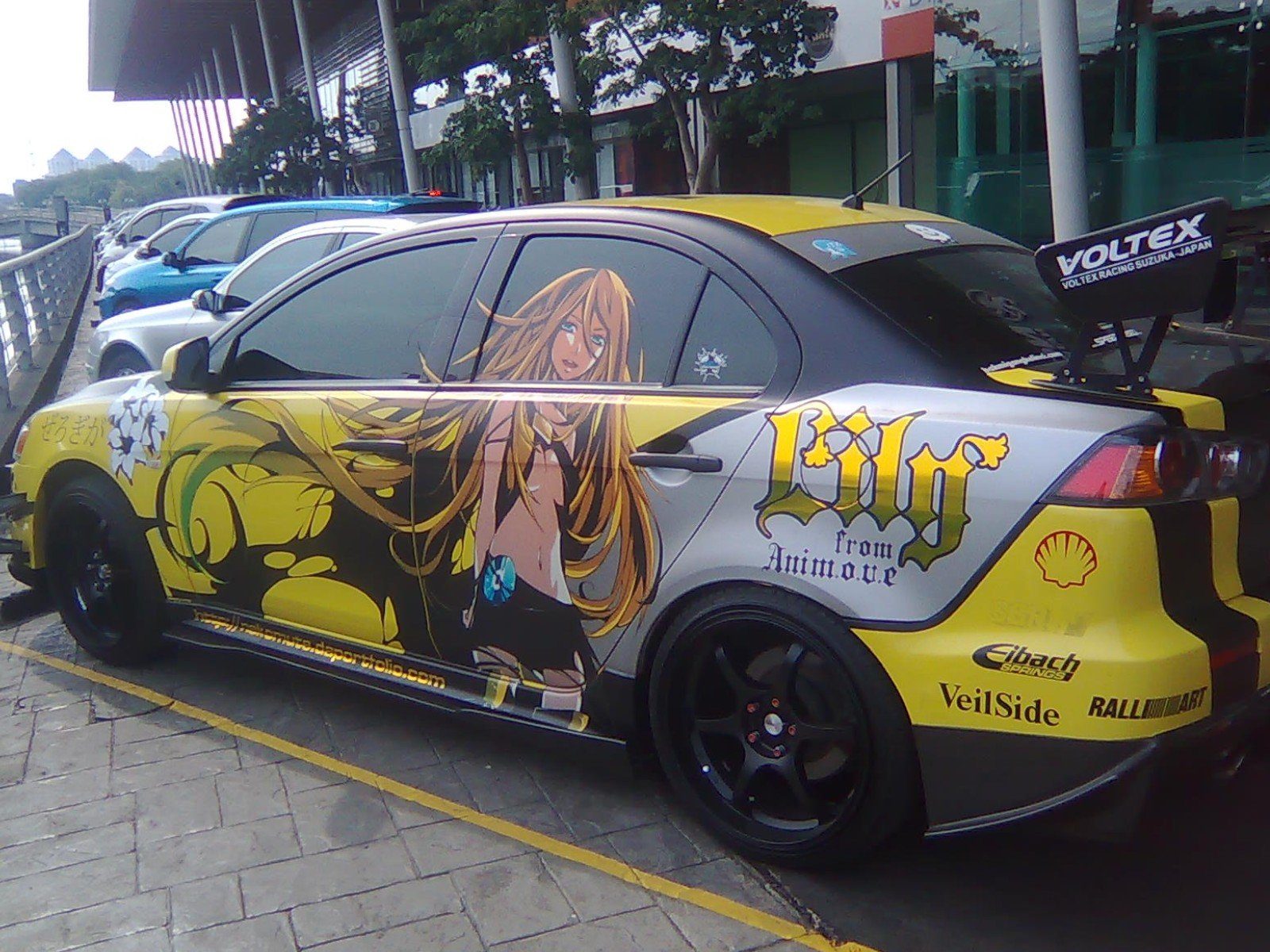
An anime wrap does not have to be loud. Many owners choose a single character on the bonnet or rear quarter, or a subtle monochrome design on a black or grey car.
Types of anime wrap
| Type | Coverage | Typical use | Notes |
|---|---|---|---|
| Decal or sticker | Small area, one panel | Testing the look, low budget | Cut vinyl or small print |
| Side graphic | Doors and rear quarters | Most common itasha layout | Needs careful alignment across door gaps |
| Bonnet piece | Bonnet only | Bold single image | Gets the most sun |
| Full-body print | Entire car | Show cars, events | Most design work and cost |
| Partial over colour wrap | Base colour wrap plus printed panels | Clean, modern itasha look | Combines two wrap types |
How a printed wrap is made
Unlike colour-change wraps, which use film that is already coloured, an anime wrap is printed.
- Measure or template the car. Designers use vehicle templates or measure the car to place the artwork accurately around door handles, gaps and curves.
- Design the layout. The artwork is arranged so faces and key details avoid door gaps, handles, fuel caps and deep recesses, where they would distort or be cut.
- Print on cast wrap film. High-quality cast film is used because it conforms to curves without shrinking back.
- Laminate. A clear protective laminate goes over the print. It protects the ink from UV, scratches and washing, and comes in gloss, satin or matte.
- Install. The printed panels are fitted like any wrap, with heat used to conform the film and post-heating to lock it into shape.
Artwork rights
Characters from anime, manga and games are protected by copyright. Personal fan use is common, but commercial use, such as on a business vehicle, can infringe the rights holder’s work. Use artwork you have the right to use, commission original fan art from an artist who permits its use, or check the publisher’s guidelines.
Resolution and design tips
A wrap image is seen from a few metres away, but people at car meets will look closely. Low-resolution artwork turns blurry or pixelated when enlarged to door size.
- Use high-resolution vector artwork or very large raster files prepared for print.
- Ask the wrap studio to show a scaled proof on a picture of your car before printing.
- Keep faces and text away from door gaps and body creases.
- Think about the base colour: dark backgrounds make bright characters pop; light backgrounds give a softer, more pastel look.
- Mirror-image the design carefully if you want the same character facing forward on both sides.
How printed wraps cope with UAE sun
Printed graphics face more sun stress than plain colour films, because the inks themselves can fade.
- Laminate matters most. A UV-resistant laminate significantly slows fading. Ask which laminate the studio uses and whether it is matched to the film by the same manufacturer.
- Horizontal panels age first. A bonnet print fades faster than a door print. Consider placing the main character on vertical panels.
- Bright colours fade differently. Some ink colours fade sooner than others, so a print can shift in tone over time.
- Shade parking is the cheapest way to extend the wrap’s life.
If you also want protection against stone chips, clear PPF can be applied over some printed wraps on the front end; ask the installer whether the film combination is compatible. Our wrap vs PPF vs ceramic coating comparison explains the differences between these layers.
Rules and approvals in the UAE
Before you commit, consider:
- Main colour. If the wrap changes the car’s main colour, you may need to update the colour on the vehicle registration. Check with the RTA in Dubai or your emirate’s licensing authority.
- Public decency. Keep imagery suitable for public roads in the UAE. Revealing or offensive images can cause problems with authorities.
- Commercial messages. Adding brand logos, social media handles for a business or advertising text may be treated as vehicle advertising, which can need a permit.
- Windows. Do not cover the windscreen or front side windows with graphics; window tint rules apply to glass.
The best anime wraps are planned around the car’s shape, not just enlarged onto it.
Choosing a studio for a printed wrap
A printed wrap combines two skills: graphic preparation and installation. Some studios do both in-house; others print with a partner. Either can work, but ask the right questions:
- Who prepares the artwork for print? Someone must check resolution, colour profiles and placement on your exact model.
- Which film and laminate are used? Ask for the brand and product line, and whether the warranty covers fading of printed graphics, which is often treated differently from colour films.
- Will I see a proof? A mock-up on a picture of your car, plus a small printed test strip to check colours, avoids surprises.
- How are panels joined? Large designs are printed in sections. Ask where the seams will fall and how they will be overlapped.
- Do they remove badges, handles or lights? Removing parts gives cleaner edges but takes longer and needs care with clips and sensors.
A studio that shows you previous printed work, ideally cars that have been on the road for a while, is a good sign.
Care and removal
- Hand wash with a pH-neutral shampoo; avoid brush washes.
- Do not use strong solvents on printed areas.
- If the laminate is matte, use matte-safe products and avoid wax.
- Have the wrap removed professionally when it reaches the end of its life, ideally before it becomes brittle in the sun, to avoid adhesive residue or paint damage.
For more on wrap care, see our guide on how to wash a wrapped car.
Frequently asked questions
Are anime car wraps legal in the UAE?
Wraps themselves are common. Check whether a colour change must be recorded, keep imagery suitable for public roads, and avoid commercial messaging without a permit.
How long does a printed anime wrap last?
It depends on the film, laminate, ink and how much sun the car gets. Horizontal panels fade first, so shade parking helps.
Can I use any anime image for my wrap?
Characters are copyrighted. For personal use, many fans commission original fan art; commercial use needs permission from the rights holder.
Can I start with a small decal?
Yes. A single panel or a small decal is a good way to test the look before a larger wrap.
Sources: 3M Automotive, Avery Dennison Graphics, Roads and Transport Authority (RTA)
Last reviewed: 2026-11-26.