PPF for Black Cars: Is It Worth It in the UAE?
Yes, for most owners PPF is worth it on a black car. Black paint shows every swirl, stone chip and wash mark, and a clear gloss film takes that daily damage instead of the clear coat. The catch is that black also shows poor installation, so the prep and the installer matter more than the film brand.
In this guide
- Why black paint is the hardest colour to keep perfect
- What PPF actually does on black paint
- Full front, full body or just high-impact areas
- Gloss, matte or coloured film on a black car
- What a good installation looks like on black
- Living with PPF on a black car in UAE heat
- How long it lasts and when to replace it
- Cost factors to ask about
- Frequently asked questions
Why black paint is the hardest colour to keep perfect
Black does not scratch more easily than white or silver. The clear coat on top is usually the same product. What changes is how visible the damage is. Light-coloured paint scatters light and hides fine marks; black acts like a dark mirror, so every fine scratch catches the sun and shows as a bright line.
In the UAE that effect is stronger. Fine sand is carried by wind onto every surface, and wiping a dusty black car with a dry cloth is enough to leave a web of micro-scratches. Automatic brush washes, a common choice at petrol stations, are another source. After one summer, many black cars that were never protected look grey and hazy in direct sun.
Stone chips are the other problem. On highways like the E11 and E311, small stones thrown by trucks hit the bonnet, bumper and mirrors. On black paint a chip shows the grey primer or bare metal underneath and stands out from metres away.
What PPF actually does on black paint
Paint protection film is a clear thermoplastic urethane layer, usually around 150 to 200 microns thick, with a top coat and an adhesive layer. On a black car it does three jobs:
- It absorbs stone impacts that would otherwise chip the paint.
- Its top coat takes wash marks and fine scratches. On self-healing films, light marks disappear with heat, and in the UAE the sun often does that job on its own.
- It blocks UV that slowly dulls the clear coat over years of parking outdoors.
A good gloss film can make black look slightly deeper and wetter, because the surface is smoother than a typical factory finish. A poor or old film does the opposite and can look cloudy or slightly yellow.
The rule for black cars
Have the paint machine-polished before the film goes on. Any swirl left under the film is sealed in for years and will show just as clearly through the film.
Full front, full body or just high-impact areas
Coverage is the biggest decision and the biggest price driver. Our guide to full front vs full body PPF covers it in detail; the short version for black cars is below.
| Coverage | Areas | Good for | Watch out for |
|---|---|---|---|
| High-impact strips | Bumper, bonnet edge, mirrors, door edges | Tight budget, leased cars | Visible film edge across the bonnet |
| Full front | Full bonnet, bumper, front wings, mirrors, headlights | Highway drivers | Rear doors and sides still swirl when washed |
| Full body | Every painted panel | Owners who want a flawless black car | Highest cost, installer skill matters most |
On black paint, partial bonnet coverage has a specific drawback: the line where the film stops across the bonnet can catch dust and show as a faint edge. Many owners of black cars choose the full bonnet for that reason even when they skip the rest of the body.
Full body coverage is where black cars benefit most compared with other colours, because swirls from washing happen on the doors, roof and boot lid too, not only at the front.
Gloss, matte or coloured film on a black car
Most black car owners choose clear gloss PPF, which keeps the factory look. Two alternatives are worth knowing:
- Matte or satin clear film turns gloss black into a satin black finish while protecting it, and can be removed later to return to gloss.
- Coloured films can change the colour and protect in one layer, though the range is smaller than vinyl.
If you are unsure what finish suits you, our wrap vs PPF vs ceramic coating comparison sets out the trade-offs side by side.
What a good installation looks like on black
Installation quality is easier to judge on black than on any other colour, so inspect carefully at handover in daylight, not under workshop LED lights alone.
- The paint should be decontaminated and polished before fitting. Ask the installer what correction they do and whether it is included.
- Edges should be wrapped around panel edges where possible, so there is no visible line on the face of the panel.
- Look for lifted edges, trapped dust specks and stretch marks, especially around sensors, badges and the front grille.
- Small moisture bubbles can be normal for a few days while the film settles. Dust under the film or a thin hair is not normal and should be redone.
- Ask for the film brand and warranty in writing, including what the warranty covers if the film yellows, cracks or peels.
Living with PPF on a black car in UAE heat
Film does not make a black car maintenance-free. It changes what you maintain.
- Wash with the two-bucket method or a pre-foam, and avoid dry wiping dust off the paint.
- Avoid brush car washes. Touchless washes are fine; high pressure jets should stay a sensible distance from film edges.
- Wash in shade or early in the morning. On a black panel in summer, water dries in seconds and leaves mineral spots, especially with hard tap water.
- A ceramic coating on top of PPF is common and makes washing easier. Use a coating approved for film.
- Bird droppings and tree sap should come off within a day or two, as heat bakes them in fast.
On a black car, the film protects the paint, but the way you wash decides whether it still looks deep after three summers.
How long it lasts and when to replace it
Branded films from major makers typically carry warranties of several years against yellowing, cracking and delamination, but actual life in the UAE depends on how much time the car spends in direct sun. A car parked in a covered basement and one parked outdoors in Al Quoz will age differently.
Signs that film on a black car needs attention: a dull or hazy look that polishing the film does not fix, yellowing that shows when compared with an unprotected panel, edges lifting and collecting dirt, or cracks in the top coat. Old film should be removed by a professional, ideally with steam or controlled heat, to avoid pulling the clear coat.
Repainted or touched-up panels
If a panel has been repainted, the new paint may not bond as well as factory paint. Tell the installer before fitting, because film removal later can lift poorly bonded paint.
Cost factors to ask about
Prices in Dubai, Abu Dhabi and Sharjah vary widely between studios, so get written quotes rather than relying on numbers online. The main factors are coverage, the film brand and range, the size and shape of the car, how much paint correction is needed first, and whether the installer uses pre-cut patterns or bulk film with wrapped edges. For black cars, the paint correction step can add a significant share of the total, since black needs the most polishing.
Frequently asked questions
Does PPF make black paint look less glossy?
A good gloss film on well-prepared paint usually looks as glossy as the original or slightly glossier. Cheap or ageing film can look duller, which is more visible on black.
Can I use PPF only on the front of a black car?
Yes. Full front coverage is common. The sides and roof will still show wash swirls over time unless you wash carefully or add a ceramic coating.
Will PPF stop swirl marks from washing?
It takes the swirls instead of the paint. On self-healing films many light marks disappear with heat; deeper marks stay in the film, which can be polished lightly or replaced.
Is ceramic coating enough for a black car instead of PPF?
Coating makes washing easier and adds gloss, but it does not stop stone chips. Many owners combine both: film at the front, coating everywhere.
Sources: XPEL, 3M Automotive, Roads and Transport Authority (RTA)
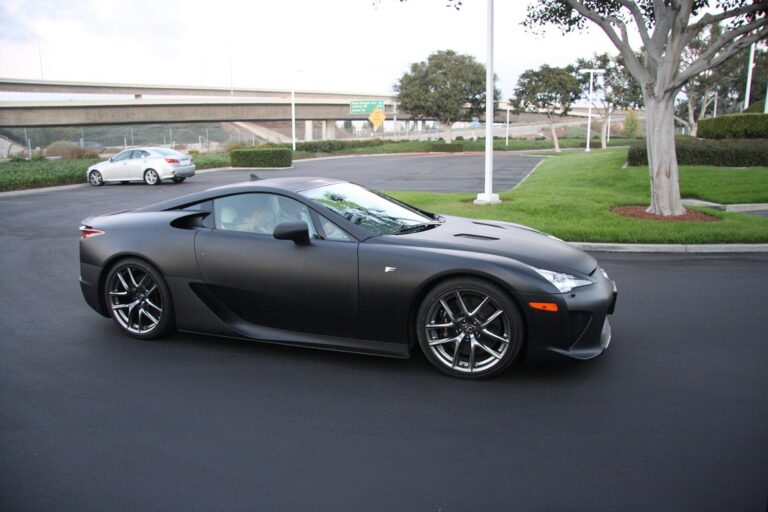
Cover photo: Leijurv, CC BY-SA 4.0. Last reviewed: 2026-11-26.