Carbon Window Tint: The Matte Middle Ground Between Budget and Ceramic Film
Carbon window tint is a film that uses fine carbon particles mixed into its layers to absorb heat and darken the glass, giving a matte charcoal look that does not fade like cheap dyed film. It sits between budget dyed films and premium ceramic films: noticeably better than the cheapest options for heat and durability, but usually less effective than good ceramic at the same shade.
In this guide
- How carbon film works
- Carbon versus other films
- How carbon performs in UAE conditions
- Who should choose carbon
- Shades and how they look on different cars
- Removing old film first
- What to check before buying
- Installation and curing
- Caring for carbon tint
- Carbon in a wider protection plan
- Frequently asked questions
How carbon film works
Carbon particles absorb a good share of infrared energy and visible light. Because carbon is very stable, the film keeps its colour for years instead of turning purple or brown, which is a common failure of low-cost dyed films in strong sun. Carbon is also non-metallic, so it does not interfere with phone signals, GPS, radio or toll tags.
The trade-off is that carbon works mostly by absorption. The glass itself warms up and some of that heat moves into the cabin. Ceramic and multilayer films are better at rejecting heat before it is absorbed, especially in lighter shades.
Carbon versus other films
| Feature | Dyed | Carbon | Ceramic |
|---|---|---|---|
| Look | Can look shiny or tinted blue/purple over time | Deep matte charcoal | Neutral, clear-looking at light shades |
| Colour stability | Weak | Strong | Strong |
| Heat rejection at legal shades | Low | Moderate to good | Good to very good |
| Signal interference | None | None | None |
| Glare reduction | Depends on darkness | Good | Good |
| Price | Lowest | Mid | Higher |
Carbon is the film for drivers who want a clean, durable look and solid comfort without paying ceramic prices.
How carbon performs in UAE conditions
In the UAE, the legal tint limit stops drivers from going very dark. That matters for carbon, because a lot of its heat performance comes from darkness. At the legal shade, carbon still cuts glare and blocks most UV, and it helps with heat, but a ceramic film of the same darkness will usually feel cooler on a long summer drive.
Where carbon shines is durability. It holds its colour in strong sun, which makes it a much better long-term choice than cheap dyed film for cars that live outdoors.
Watch the legal shade
Carbon films are often sold in dark shades popular in other markets. In the UAE, check the final darkness including any factory tint on rear glass. Our Window Tint VLT Calculator helps estimate the combined result.
Who should choose carbon
- Drivers upgrading from old, faded dyed film who want a reliable improvement without premium cost
- Owners who like the matte charcoal look on side windows
- Cars that are mostly parked in covered or underground car parks, where peak heat rejection matters less
- Second cars, family runabouts and fleet vehicles where cost control is important
If heat is your main concern and your car parks outside, ceramic usually justifies the extra spend.

Shades and how they look on different cars
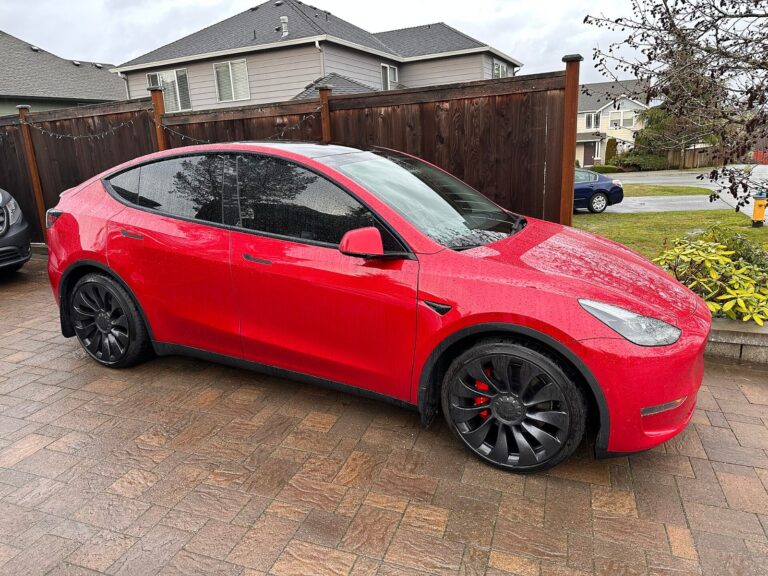
Carbon films are sold in a range of shades. On dark-coloured cars, a carbon film tends to blend in and gives a smooth, uniform look between the glass and the body. On white, silver and other light colours, the contrast is stronger, and some owners prefer a slightly lighter shade so the car does not look too heavy. Seeing sample panels on a real car outdoors helps more than looking at a brochure indoors.
Interior colour also changes the effect. A dark interior behind carbon film looks almost black from outside in daylight, while a beige or light grey interior shows more through the same shade. If you want a particular look, ask the installer to hold a sample against your actual window in sunlight before choosing.
Removing old film first
Many carbon jobs in the UAE start with removing an old, faded film. Bubbled or purple dyed film usually comes off in pieces, and the adhesive left behind must be fully cleaned before new film goes on, or the new tint will show the marks. Removal takes extra time, especially on rear windows with defroster lines, so expect it to appear as a separate line on the quote.
What to check before buying
Questions for the installer
- Which brand and product line is this carbon film?
- What are the VLT and TSER for the exact shade you are fitting?
- What does the warranty cover: colour change, bubbling, peeling, delamination?
- Is the warranty from the manufacturer, the shop, or both?
- Will you meter the windows after installation?
Ask to see the film roll and label before installation. Some low-cost films are described as carbon when they are actually dyed films with a small carbon content.
Installation and curing
Carbon film is installed like any other tint: glass cleaned, film cut and heat-shaped for curved windows, then applied with slip solution and squeegeed. A light haze or small water pockets are normal at first. In summer they usually disappear within days; in cooler months it can take longer. Keep windows up for the time your installer recommends.
Caring for carbon tint
- Wait until the film has cured before cleaning the inside of the glass.
- Use a soft microfibre cloth and ammonia-free cleaner.
- Wipe dust off gently; dry sand can scratch the film surface.
- Avoid stickers, suction mounts and sharp objects on tinted glass.
Carbon in a wider protection plan
Many owners combine carbon tint on side and rear windows with a clear heat-rejection film on the windscreen where permitted, plus a sunshade for parking. That gives good daily comfort for a moderate budget. If you are also thinking about protecting the paint, our Wrap vs PPF vs Ceramic Coating guide compares the main options.
Frequently asked questions
Is carbon tint better than ceramic?
Not usually for heat. Ceramic tends to reject more heat at the same shade. Carbon is cheaper and still durable, with a matte look many people like.
Does carbon tint fade?
Quality carbon film is very colour-stable and should not fade or turn purple the way cheap dyed films can.
Does carbon tint affect phone signal?
No. Carbon is non-metallic and should not interfere with phone, GPS or radio signals.
Is carbon tint legal in the UAE?
Yes, as long as the final darkness stays within the legal limit. Check the combined figure on windows with factory tint.
How long does carbon tint last?
Quality carbon films often carry long manufacturer warranties. Actual life depends on the product, installation and how the car is used and parked.
Sources: International Window Film Association, Abu Dhabi Police, LLumar Window Film
Last reviewed: 2026-11-25.