Metallic Blue Car Paint: How It Works and How to Choose a Shade
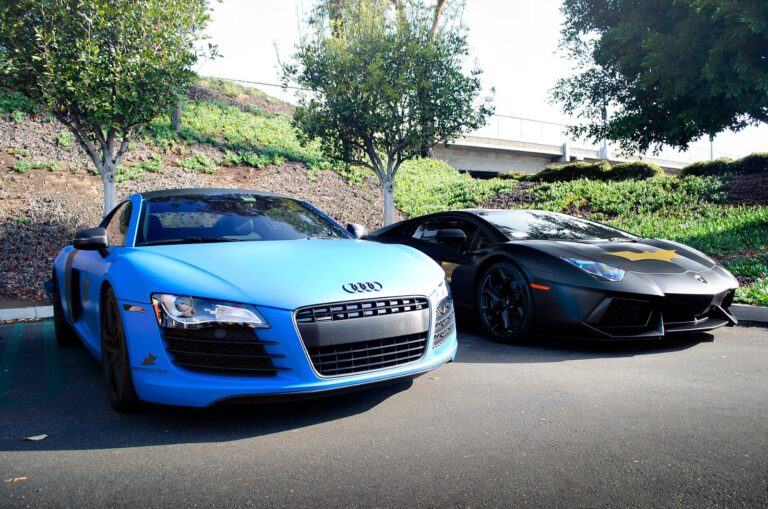
Metallic blue paint mixes blue pigment with tiny aluminium flakes, so the colour sparkles in the sun and looks lighter or darker depending on the angle. It is one of the most popular “colourful” choices because it looks vivid without being loud, hides dust better than dark solids, and suits almost any car, from family SUVs to sports cars.
How metallic paint creates its effect
In a solid colour, the base coat contains only pigment. In a metallic colour, the base coat also contains very fine flakes of aluminium. When the paint is sprayed, the flakes settle roughly parallel to the surface, like tiny mirrors, and reflect light back through the blue pigment.
That gives metallic blue two looks at once. Viewed straight on, where the flakes reflect directly towards you, the colour is bright and sparkling. Viewed at a steep angle, along the side of the car, fewer flakes reflect towards you and the colour looks darker and richer. Painters call this the difference between “face” and “flop”, and it is the reason metallic paint makes body lines look so sharp.
Pearl or mica paints work in a similar way, but use mineral or synthetic particles that also shift the colour slightly, for example from blue towards purple or green. Many blues sold as metallic are actually a mix of metallic flake and pearl.
The main metallic blue families
| Shade family | Character | Typical look on the road |
|---|---|---|
| Light or ice blue metallic | Pale, silvery blue | Fresh and clean; hides dust well |
| Mid or “electric” blue metallic | Vivid, saturated blue | Sporty; very eye-catching in sun |
| Navy or midnight metallic | Very dark blue, near black in shade | Elegant; behaves like a dark colour |
| Blue-grey metallic | Muted, steel-like blue | Modern and understated |
| Blue with pearl shift | Changes toward purple, teal or silver | Custom feel; more complex to repair |
For the darkest end of the range, see our dedicated guide to midnight blue car paint.
Why metallic blue is a smart choice in the UAE
Dust. The sparkle of the flake helps disguise a light layer of dust. A mid or light metallic blue will look clean noticeably longer than a solid dark blue or black.
Swirls. Fine wash marks are harder to see on metallic finishes than on solid colours, because the flake breaks up reflections.
Heat. Lighter metallic blues stay cooler than dark colours. Navy and midnight blues behave much like black and get hot in direct sun. If you park outdoors, tint helps whatever the colour; our window tint VLT calculator can help you compare options.
UV. Modern blue pigments under a healthy clear coat are stable. As with any colour, the clear coat on the roof and bonnet ages fastest, so protection and shade parking help.
Pick the shade outdoors
Metallic blues change dramatically between showroom lights and the street. View the colour in direct sun, in shade and at dusk before you decide, and look along the side of the car to see the flop.
Repairing metallic blue: what to expect
Metallic colours are harder to repair invisibly than solids. The challenge is not just the colour; it is the way the flakes lie in the paint.
- Paint code first. The code on the vehicle label is essential. Our car paint code finder explains where to look.
- Variants exist. The same code can have several factory variants, slightly lighter or darker, because of differences between paint plants or batches. A good shop will check which one matches your car.
- Spray-out cards. The painter sprays test cards and compares them with the car outdoors.
- Blending. To hide small differences in flake orientation, painters usually blend the new colour into neighbouring panels, so the repair area is larger than the damage.
- Clear coat over the whole panel. The clear coat is applied across the full panel or blended carefully so the edge does not show later.
A repair can match perfectly when you look straight at it and still look different along the side of the car. That is a flop mismatch, and it is worth checking at handover.

Metallic blue wraps
If you like metallic blue but your car is another colour, vinyl wraps are an alternative to a respray. Major film makers offer many metallic and pearl blues in gloss and satin, as well as colour-shift films that move between blue and other tones. A wrap protects the original paint and can be removed later, though it should be installed and removed by a professional.
For a full comparison with paint protection film and coatings, see our wrap vs PPF vs ceramic coating comparison. If you are considering a full colour change, check with the RTA in Dubai or your emirate’s licensing authority whether the new colour needs to be recorded.
Metallic blue is the rare colour that looks exciting on the road and still forgives a dusty week.
Care tips for metallic blue paint
- Rinse well before washing to remove sand.
- Use a pH-neutral shampoo and the two-bucket method.
- Wash in shade or early in the morning; dry fully to avoid water spots.
- Apply a sealant or ceramic coating to deepen the colour and make cleaning easier.
- Use PPF on the bonnet, bumper and mirrors if you drive long highway distances, where stone chips are common.
- Polish only when needed, using a fine polish; heavy cutting can affect the clear coat over time.
Touch-up paint for stone chips
Highway driving in the UAE means stone chips on the bonnet and bumper sooner or later. On metallic blue, a fresh chip shows as a bright grey or white dot. Small chips are worth sealing quickly so the metal underneath does not corrode.
- Buy touch-up paint by paint code, not by colour name.
- Clean the chip with a panel wipe or isopropyl alcohol and let it dry.
- Apply the base coat in thin layers with a fine brush or toothpick, filling the chip rather than painting around it.
- Once dry, add a drop of clear coat, which gives the metallic its depth.
Touch-up work on metallic paint will never look as smooth as a body shop repair, because the flake cannot be laid down the same way with a brush. From normal viewing distance, though, a neat touch-up makes a chip far less visible and protects the panel. If chips keep appearing, it is a sign the front of the car would benefit from PPF.
How it affects resale
Blue is consistently among the more popular non-neutral colours. A tasteful metallic blue tends to appeal to more buyers than bright or unusual colours, though neutral colours still dominate the used market. As always, condition matters more than colour: a well-kept metallic blue with original paint will be easier to sell than a neutral car with mismatched repairs.
Frequently asked questions
What is the difference between metallic and pearl blue?
Metallic uses aluminium flake for sparkle; pearl uses mica or synthetic particles that also shift the colour slightly. Many paints combine both.
Is metallic blue paint harder to repair?
Usually yes, because the flake orientation must match. Blending into neighbouring panels is common.
Does metallic blue fade in the sun?
With a healthy clear coat it is stable. Fading or dullness usually means the clear coat has aged.
Is metallic blue a good colour for a car in Dubai?
Light and mid metallic blues are practical: they hide dust and stay cooler than dark colours.
Sources: PPG, Axalta, 3M Automotive
Last reviewed: 2026-11-26.